An Interview with Joe Tesori Jr.

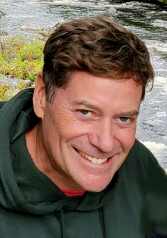
Joe Tesori Jr. has dedicated his life to golf, tirelessly working to bring out the best in his players and students. Currently, he serves as the Executive Director for PGA REACH CNY and volunteers for the LeMoyne College men’s golf program.
 During his time at LeMoyne College, Joe was named Northeast-10 Conference Player of the Year in his sophomore season. In his junior year, he was part of the first Dolphins team in the program’s history to compete in the NCAA National Championship. Following in the footsteps of his father, PGA Hall of Famer Joe Sr., Joe entered the coaching ranks.
As the former coach of the SUNY Cortland women’s golf team, Joe earned Northeast Conference Women’s Coach of the Year honors in 2019 and Empire 8 Coach of the Year honors in 2017 and 2018. He also guided Cortland State to its first appearance in the NCAA National Championship in 2014.
Joe’s wealth of golf knowledge and his pride in being a PGA Professional are evident in his commitment to growing the game of golf. I recently had the pleasure of sitting down with Joe at Wegmans, and I hope you enjoy our conversation.
DB: Tell us about your younger years around the game of golf?
JT: I grew up around my father; he was the director of golf at Drumlins for 30 odd years. So, I grew up in that clubhouse. I’d get dropped there by my mother and be driven home by father at 8:00pm at night. So, I was at Drumlins every day, all day for basically my whole childhood. Obviously, I played. I always thought I was a decent enough player, but I really loved football. I had a couple letters to play football, but it was strictly more of a specialist role. I talked with my father and decided to play golf. Then in my sophomore year at LeMoyne I won a pretty big tournament, our conference championship. From there I was like I gotta put more effort into this because I realized that I could win some big tournaments against some good players. So, I shifted my focus that day after I won that event. I had some good success in high school, made the state team one year. I grew up with a lot of great players. I was never winning the amateur circuit when I was in high school, but I was always there, but I loved football. I just played golf secondary to be honest with you. But after winning that tournament I kind of shifted my focus back to golf, and have been there ever since.
DB: You mentioned your Dad, Joe Tesori Sr., who was inducted in the PGA Hall of Fame. What did that mean to him, and to your family?
JT: That was awesome. He’s been fortunate; he’s been in multiple halls of fame. That one’s probably, in my opinion, the pinnacle. I don’t know what he’ll say. It’s funny that was the same class as Gary Player, so seeing my father and Gary Player both get inducted was really cool. It meant a lot for him, obviously being a PGA member. He was PGA President in our section, he was in our section hall of fame, and the game of golf has done everything for my father, so that truly was an amazing call that he received. So being in the PGA Hall of Fame with some of those names is pretty humbling for sure.
DB: You mentioned your success at LeMoyne when it started to click for you, take us through your experience at LeMoyne. I believe you were Northeast 10 conference player of the year one year?
JT: Yeah, so when you win the conference championship, you get named player of the year, so that was kind of cool. I played with Danny McCarthy (currently on the Korn Ferry Tour), who is a dear friend of mine. He was on my team and was All-American and we had Timmy Martins, Bruce Martins’ son, who is the owner of Elm Tree. So, we had a great team; we had a band of misfit toys (laughs) and players who knew their roles. We all knew that Danny was our best player, obviously, that didn’t stop anyone from trying to beat him every single week and some days we did. More often than not, we didn’t, but that just created a bond with our team. We were the first LeMoyne team to make it to the Nationals, although now it’s division one, but that division two stretch from 2009 – 2020 they went to the Nationals five or six times. It was kind of cool to be the first group to do it. We had a lot of success, we won a lot, and we had a lot of fun. Those were my best friends on those weekends. We understood that’s what a team is. When we got back to campus, sometimes we went our different ways, but when we got on the bus and into the round, we were best of friends and that molded us into a solid team.
DB: Following your success at LeMoyne, you were the coach of the Cortland women’s team. Tell us about that experience.
JT: I was living in Florida and then a good friend of mine, Mike Discenza, was the head coach there. I wanted to get my master’s degree and come back home. I got into the program at Cortland State, and I was going to help Mike out. My first week there, he called me into his office; I thought I was in trouble. He basically told me that he was leaving to go to Bellevue to be the first assistant there. I said that’s great. He said we’ll need a coach, so the first week there I literally went from being a grad assistant to being the interim head coach. Mike shadowed me that whole Spring and then it was my program. I was there for eight years. We had a lot of success, and a lot of great players. Some of my dearest friends are Cortland folks. I’m still in a lot of group chats with coaches and AD’s (Athletic Directors) and I met my wife there. So, I owe a lot to Cortland State; my wife was the gymnastic’s assistant there. Cortland was a great time in my life.
DB: So you met your wife at Cortland. Tell us about your family?
JT: My wife Sara, she’s a teacher at Marcellus, she’s from Buffalo. We have three boys; Charles is seven, Anthony is four, and Louie is about a year and a half. They’re doing everything, keeping us on our toes, they’re very loud, but it’s been fun. We have three kids under the age of seven, so it’s been tough obviously, but they’re all good kids and we try our best to do what we can. They’re all into certain sports; golf has kind of been organically passed onto them. I haven’t really pushed them too much into it. But last year Charles really got into it, so he’s getting there, but there’s baseball, football and wrestling. They really like all those sports, but you know, they’ll pick up golf. They’ve started to ask, “Hey Dad where are you going?” So now when I go out to chip and putt somewhere, they’ll come with me and that’s been fun.
DB: You’re the Executive Director of PGA Reach; tell us how that came about?
JT: I was the tournament director for the section for three or four years, and Alan Seamans, our CEO, approached me a couple of years ago. Our foundation was starting to get some focus from our board of directors; we needed to put some effort into it. We always had a foundation, but we never put focus on it, and an opportunity came about. He offered me the role, a new role, to be the Executive Director. ‘PGA Hope’ is our veteran pillar and our largest pillar for sure, and that’s a lot of my focus. ‘PGA Junior League,’ our youth pillar, drive, chip and putt. It’s been an amazing program for our coaches in our area. We worked a lot with women’s groups and minority groups. What we’re trying to do is get the game of golf to look more like airports, and we’re trying to get more underrepresented communities into the game of golf. PGA Hope gets the veterans out of the house, out of their comfort zones, out into the golf course. It’s been an amazing program, and it’s grown quite a bit. I always say that it’s not about the golf, it’s about getting these guys and girls outside. Just being around each other. If you haven’t done it and you’re a PGA member, I would urge you to do it because it really is something that humbles you and gives you great perspective of what really matters.
DB: I know from my recent interview with Mel Baum that PGA Hope has really changed his life; talk about Mel’s work with this great program.
JT: Mel got certified a couple of years ago and he wanted to bring a program to Wanoa. There are certain programs that are headquarter funded and we fund the rest. So, the first year Mel did it, the foundation paid for his entire program. He loved it and then he submitted for funding from headquarters and he got it. Now they’re doing an amazing job; it’s been two years now of HQ funded. He’s done an amazing job communicating to these veterans; he has a way with his words of getting the new vets in and the folks who’ve come through the program previously. He has them volunteer, to keep these fresh veterans coming in. I’ve used Mel as an example quite a bit, because he’s done a really good job of getting newer vets. It’s hard to find so many new vets in this area. That’s why he’s been so successful; he’s gotten memberships out if it, he has gotten events out of it; they’ve really taken a liking to him. He personally enjoys it, really takes pride in it. Mel’s an accomplished player and teacher, and he knows what he’s talking about. He’s genuinely friends with a lot of these veterans.
DB: Tell us about your time as tournament director of the Central NY PGA.
JT: In 2019, I got the job to be tournament director, so I did that for four years and running tournaments across their section. Running the Dicks Sporting Goods qualifier down in Binghamton and running the AIM Championship with our amateur following. Boots on the ground, setting pins, setting hole locations and working with our PGA members. It was really a fun time, and I put a lot of pride into what I did. I feel like I elevated the tournament program and diving into some partnerships and some sponsorships thus generating higher purses. That was a lot of my duties, but it got to a point where else could I go? I have been running tournaments for my whole life. So, then I got the role as Assistant Executive Director, where I spent more time on partnerships and sponsorships and operational wise. Then we hired Dylan Plis to be our tournament director. He worked under me for a year, now he’s taken it over. From there I was offered the Executive Director position with the foundation. My role has shifted from the section to the foundation. I wouldn’t change a thing; I loved being a tournament director, I took great pride in that.
DB: For our Table Hopping readers, give us some of the best golf tips to help out amateurs all over Central New York.
JT: What’s helped me with my game personally, I’ve had some pretty good successes over the past couple of years. As crazy as this may sound, I have tried to literally ‘dumb it down’ as much as I could. Right knee to target, keeping my hands on the club and good posture. I’ve gotten away from worrying about so many things, I think that’s a downfall, and I learned a lot about that through coaching. We deal with a lot of students, and everyone has a perfect swing that they are trying to search for, but at the end of the day, they miss their fundamentals. The right grip, the right posture, the right alignment, the right balance, and the right thought process. Not hitting a driver just because it’s a par-4, just thinking your way around the golf course is crucial to amateur golf. The quicker you can adapt to understanding that you’re going to hit a bad shot today, the quicker you understand that, the quicker you’re going to become a better player. Golf is incredibly difficult and when you hit a poor shot, it’s okay, you’re going to hit seventy more. You just need to know where to miss it, and how good your bad shots are. My father would always tell me, “How good are your bad shots?” If your bad shots are okay, you’re going to be all right. If your bad shots are duffs, balls in the water, and balls out of bounds, and that type of stuff, that’s just course management. If you have out of bounds right, then aim left, as dumb as that might sound. That’s as simple as it is. If you listen to the great players, Rory, Scottie or Cantlay, talk in their press conferences, a lot of times it’s simple theories that they talk about. The quicker you can understand where not to go, and how humility plays a major role, you can really start to excel in this great game.