
Happy International IPA Day!
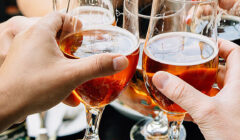
August 6th marks a holiday that most all of us beer-lovers can get behind – International IPA Day! Always the first Thursday in August, this global celebration has its origins in the digital age – 2011 to be exact. The celebration began on social media with a goal of uniting bloggers, writers, brewers, educators and consumption-enthusiasts everywhere to engage in their love of beer – particularly IPAs.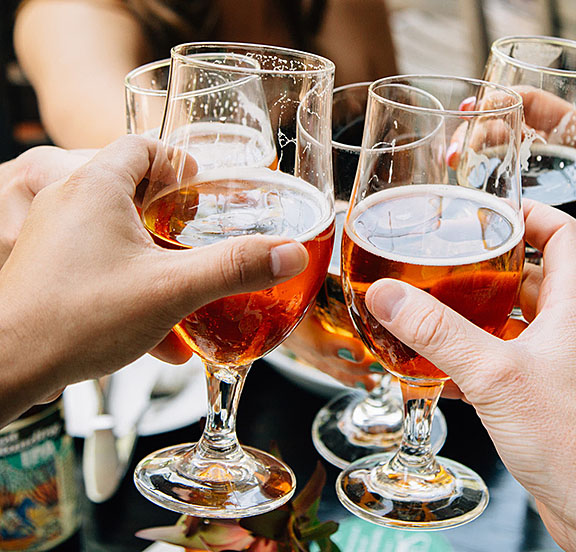
IPA stands for India Pale Ale. It might surprise you that this style of beer did NOT originate in India, but instead, England. In the 18th century, India was being colonized by the British and ships making the voyage needed a beverage to stow in large quantities for the sailors on board that would also stay fresh for weeks to months. The first noted India Pale Ale can be attributed to George Hodgson, a brewer who established a business simply named “Hodgson’s Bow Brewery.” The brewery, founded in 1751, was located on the River Lea in London next to the East India Dock where ships that were India-bound began their long perilous journeys. Because of his excellent positioning by the docks, Hodgson’s business became famous and profitable. By 1809, the brewery, then being run by his son Mark, had become so well-known that famous writers, like William Makepeace Thackeray, noted it in their writings. In 1833, newspaper advertisements referred to Hodgson’s beer as “East India Pale Ale.” Thus, over the course of many years, Hodgson created a beer that would be tasty even after long periods of storage and with it the birthchild of our modern-day IPAs.
The history of IPA, depending on whom recorded it, does differ in variations. In some historian circles, George Hodgson did not “invent” or “develop” a new style of beer, as there were plenty of other, different brewers around the docks with businesses of their own. Every brewer who was selling to the ship captains knew that in order to have a successful, stable beer that could withstand the journey for 4+ months, as well as stay potable in a warmer climate, the beer had to be quite strong and heavily hopped. As per the anonymous Every Man His Own Brewer manual of 1768, a recipe for October Malt Wine consists of “the first two mashes of 22 bushels of malt, with six and a half pounds of hops per eight bushels of malt to ensure a year’s keeping.” As it seems, Hodgson was likely credited with being the “father” of India Pale Ale mainly because of his brewery’s success due to its location and simply by word of mouth. He also notoriously gave out lines of credit of up to 18 months – that also could have influenced his place in history!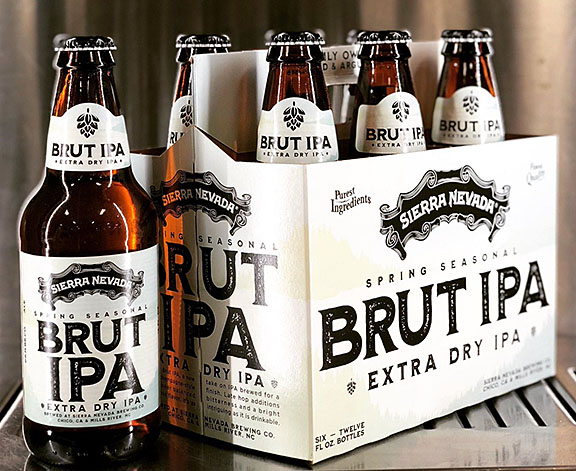
IPAs started out in their early history as “October Beer” which is a version of a British strong ale. A strong ale or old ale is traditionally dark and malty with an ABV usually greater than 5%. The “October Beer,” took on a slightly paler coloration and was more generously hopped. With the increase of ships and exports/imports to and from India, the “October Beer” began to be called “India Pale Ale.” By the late 19th century, demand for this specific style of beer grew in popularity beyond the ports, into the city of London, traveling even further into the countryside. It was then that brewers started to drop the “India” altogether and maintained the “Pale Ale” name only, without changing any of the original qualities and features of the IPA style; this was especially true when English brewers began to export the IPA-style to other British colonies such as Australia and New Zealand.
Here in the United States, our craft-beer and micro-brewery revolution began in the 1990s where brewers began to seek out unique and different beer styles, such as IPAs, that were not being mass-produced. Brewers found that traditional IPA recipes melded well with the strong and flavorful American-grown hops such as Cascade and Chinook. The resulting brews boomed in popularity across the country, and in truth, haven’t ceased in any capacity.
Today, the world of IPAs has expanded exponentially:
 • Black IPAs – dark, bitter, and hoppy. Uses roasted malts.
• Brut IPAs – crisp and dry with the enzyme amyloglucosidase added to remove sugars.
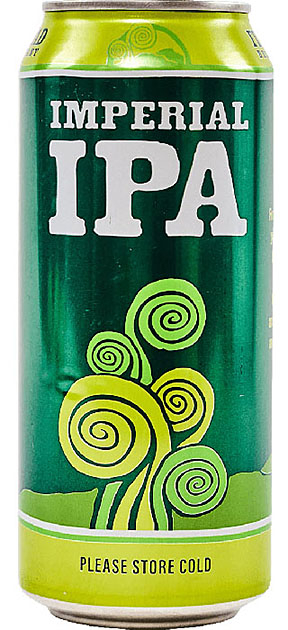
• Double IPAs or Imperial IPAs – contains a greater hop content, creating a stronger beer with ABVs typically over 7.5%
• Triple IPAs – one step up with ABVs typically over 10%.
• New England IPAs (NEIPAs) aka East Coast IPAs – hazy and juicy with prevalent citrus and floral notes. These are noted to be smooth with minimal bitterness.
• Milkshake IPAs – a version of NEIPAs with added lactose which provides the brew a creamy mouthfeel.
• West Coast IPAs – lower in malts, clear and dry, with a focus on hops. The beer typically contains earthy notes of pine and/or grass.
• Sour IPAs – hoppy, usually fruited, tart and refreshing.
• White IPAs – a combo concoction of an American-based IPA with a Belgian-style wheat beer.
From East Coast to West Coast and all around the world, be sure to grab yourself an IPA on August 6th to celebrate International IPA Day! Cheers!



Music & Events Calendar



Table Hopping is proudly powered by WordPress