
Stimulate What?

I am always looking for new ways to help my patients. Red light therapy, PEMF mats, the alpha stim device, the softwave/stemwave machine to name just a few.  I would prefer to use devices where I can immediately and directly measure their benefit but that’s often not possible so I have to rely on the literature and my patient’s own experience to judge the benefits of any given device. Just because something is not covered by insurance doesn’t mean it is not effective. On the other hand, nothing helps everyone. Some people benefit from the red light, some do not, etc. There is real science behind all of the above but that doesn’t mean everyone benefits from every device.
I have been reading a lot about vagus nerve stimulation and am going to add this therapy to my offerings. The vagus nerve is one of the twelve cranial nerves and both brings sensory information from the body to the brain and sends motor and other information from the brain to the heart, lungs, GI tract, etc. It is one of the longest and most complex of all the nerves in the body. It is intimately involved in balancing the sympathetic and the para sympathetic nervous systems. The sympathetic system is the fight or flight system and the parasympathetic system is the rest and digest system. Ideally, these two systems should balance themselves out. When the sympathetic system is overactive you get hypertension, acid reflux, bowel issues and insomnia. When the parasympathetic system is overactive you get depression, chronic fatigue, lethargy etc. There is a relationship between these two systems and inflammation in the body as well.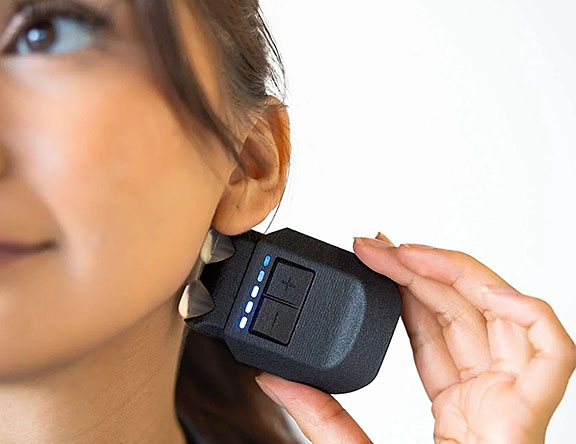
The vagus nerve collects messages about current conditions, including the strength of pro-inflammatory signals known as cytokines, from the heart, lungs, intestines and other organs. These signals are carried to the brain stem, which passes them on to other brain regions, particularly the locus coeruleus-norepinephrine system, which is involved in regulating alertness, attention and motor learning. Commands from the brain travel back down the vagus nerve, where they can make rapid adjustments to heart rate and breathing rate, promote digestion and reduce inflammation by clamping down on cytokine production. Ideally, the sympathetic and parasympathetic systems maintain a balance, promoting enough alertness, muscle tension and inflammation to handle threats while still allowing us the rest and energy reserves to focus on everything else we need to do to survive. But many conditions, including depression, anxiety, insomnia, and chronic inflammation, are linked to an overactive sympathetic system. Therefore efforts to return the system to balance should help people with these symptoms. 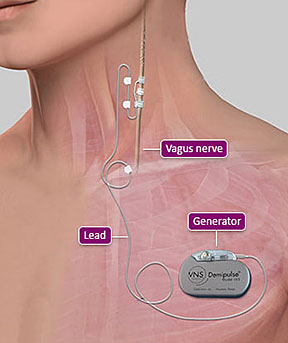 Hence the development of vagus nerve stimulators which activate the vagus nerve and increase the parasympathetic tone so it matches the sympathetic tone. Vagus nerve stimulators have been implanted in patients and are FDA approved to treat epilepsy, depression, post stroke recovery and migraines. If implanting the stimulator treats these conditions is it possible to treat them with a stimulator that is just placed on the skin? The answer is yes. You can stimulate an area on the ear and an area on the neck to directly but transcutaneously stimulate the vagus nerve. Multiple devices are now on the market. They are meant for daily use and usually a treatment takes only 10-15 minutes. Here’s just one article that reviews the physiology and function of the nerve and these devices. Critical Review of Transcutaneous Vagus Nerve Stimulation: Challenges for Translation to Clinical Practice PMID: 33355897
There might be a significant placebo effect involved but if patients get better and/or feel better using a device that seems very very safe I will be satisfied. I will try it myself as well and look forward to reporting back soon. Until then…get well and stay well.
JT BARRY MD


Music & Events Calendar



Table Hopping is proudly powered by WordPress